


Annual performance reviews are theater. Everyone knows it. The rep prepares for two weeks, the manager fills out a form, both pretend the resulting rating is calibrated. The 6-step process below replaces the theater with a quarterly behavioral signal, 360 evidence, and a coaching loop that actually moves performance between reviews.
The modern 6-step performance appraisal process: (1) baseline behavioral signal capture (not goals on paper), (2) 360 evidence collection from peers and customers, (3) rep self-assessment against the same rubric, (4) manager calibration session (the appraisal itself), (5) behavioral development plan with one named behavior per cycle, (6) quarterly review against the plan, repeat. The cycle is 90 days, not 365. The data is observable behavior, not narrative judgment.
This replaces what most companies call "the annual review," which is structurally broken because the time gap is too long, the data is too thin, and the rating ends up being calibrated against the manager's most recent memory rather than the rep's actual behavior over 12 months.
Why the Annual Review Is Structurally Broken
Five reasons the annual model fails reliably across every team that runs it. Each one is mechanical, not a question of effort or skill on the manager's part. Fix the structure, not the manager.
The Behaviors That Predict Performance Better Than Goal Ratings
If goal ratings don't work, what does? Six observable behaviors that consistently predict 12-month performance across customer-facing roles, ranked by how strongly each correlates with quota attainment / CSAT / promotion velocity:
The 6-Step Process: Quarterly, Behavioral, 360-Aware
Each step has a specific output, a clear owner, and a time-box. Skip any step and the cycle does not close. Add steps and the cycle becomes another version of the annual review you are trying to replace.
Output: a per-rep scorecard on 5-7 named behaviors, derived from 5-10 recorded customer interactions (calls, emails, meetings). Owner: AI coaching platform or trained reviewer. Anti-pattern: writing goals on paper. The baseline is what the rep is DOING, not what they will TRY to do. Goals come in Step 5.
Output: structured input from 3 peers, 1-2 customers (NPS comment or interview), and the manager, scored against the same behavioral rubric. Owner: rep coordinates, manager validates. Anti-pattern: open-ended "any feedback?" emails. Peers will write nothing useful unless you give them the rubric.
Output: the rep scores themselves on the same rubric, in writing, BEFORE seeing the manager's score. Owner: rep. Anti-pattern: verbal self-assessment in the 1:1 itself, which becomes a negotiation with the manager's pre-formed view. The order matters, self → 360 → manager calibration.
Output: a single calibrated score per behavior, surfaced delta between rep's self-score, 360 score, and manager score. The DELTAS are the conversation, not the absolute numbers. Owner: manager. Anti-pattern: grading the rep. The 1:1 is for understanding why a rep scored a 6 on "tone calibration" while their 360 said 8, not for telling the rep they got a 7.
Output: a written plan targeting ONE behavior per 2-week cycle (typically 3-4 cycles per quarter). Specific scenario practice + measurement protocol. Owner: rep executes, manager reviews dashboard weekly. Anti-pattern: stacking 5 development goals at once. The rep cannot work on five things; pick the lowest behavior score, fix that one, move on.
Output: updated behavioral scorecard, comparison to baseline, calibrated rating for the quarter, and Q+1 development plan. Owner: manager. Anti-pattern: waiting until year-end. Quarterly cadence catches drift in 90 days, not 12 months. The quarterly cadence IS the appraisal process.
The Appraisal Funnel: Where Reps Drop Off the Process
If you map a typical 100-rep team through these 6 steps, you can see where the process breaks. Funnel data from production deployments — note the drop-offs are biggest at the steps with no enforcement mechanism:
An appraisal that happens once a year is not an appraisal. It is a calibration meeting between a manager and their most recent memory. The process either runs quarterly or it does not run.
Retorio capability team, recurring observation across enterprise appraisal deploymentsWhere Each Type of Appraisal Lands by Effort vs Value
Not every appraisal mechanism is worth the effort. The bubble chart maps the common types by how much value they generate vs how much manager effort they consume. Bubble size = how often companies still run that type:
Traditional Annual vs Modern Behavioral Appraisal
Side by side on the dimensions that actually matter to a CHRO or VP Sales running the process:
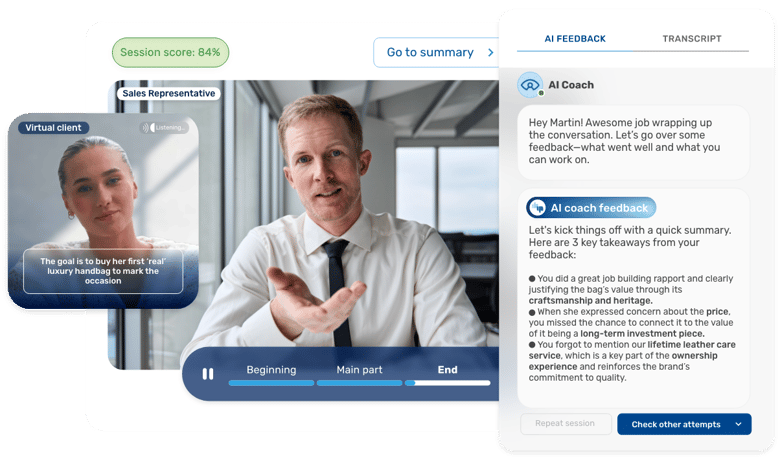
Run a behavioral appraisal cycle with Retorio
Retorio scores 140+ behavioral signals automatically across recorded customer interactions, surfaces the 360 + self + manager deltas on one dashboard, and tracks development plan execution week by week. The 6-step cycle becomes a 90-day rhythm, not an annual event.
Start with RetorioFAQ: Performance Appraisal Process
What are the 6 steps of a performance appraisal process?
(1) Baseline behavioral signal capture from recorded interactions; (2) 360 evidence collection from peers and customers against a shared rubric; (3) rep self-assessment in writing before the 1:1; (4) manager calibration session focused on deltas not absolute scores; (5) behavioral development plan with one named behavior per 2-week cycle; (6) quarterly re-baseline and start of next cycle. Each step has a clear owner and time-box.
Why does an annual performance review fail?
Five structural reasons: recency bias (last 6 weeks dominate the rating), calibration drift (managers' rubrics drift apart over a year), one-way data flow (no peer or customer evidence), coaching collapse (12-month gap between feedback), and rating compression (everyone scores 3.4-4.0 because the manager flattens differences). Quarterly behavioral cadence fixes all five.
How long should a performance appraisal cycle take?
90 days end-to-end is the sweet spot: 4 weeks for baseline + 360 + self + calibration, 8 weeks for development plan execution. Shorter than 90 days and you don't see behavior change in the plan execution phase. Longer and the data ages out of usefulness.
Can performance appraisals be done without 360 feedback?
Yes but the data is worse. Manager-only appraisal has the recency and calibration problems noted above; rep self-only has motivated reasoning. 360 from 3 peers + 1-2 customers triangulates these biases. The cost is one structured email per peer per quarter, not a heavy lift.
How does AI change the performance appraisal process?
AI scores behavioral signals (tone, question structure, response latency, empathy markers) automatically across recorded customer interactions. This replaces "manager memory" as the primary data source. The cycle becomes evidence-driven rather than impression-driven, and the manager moves from grading to coaching.